 VisionHub
Update: this article dates from 2023 and reflects the regulations in force when it was published. For flying today, see drone regulations in Spain in 2026.
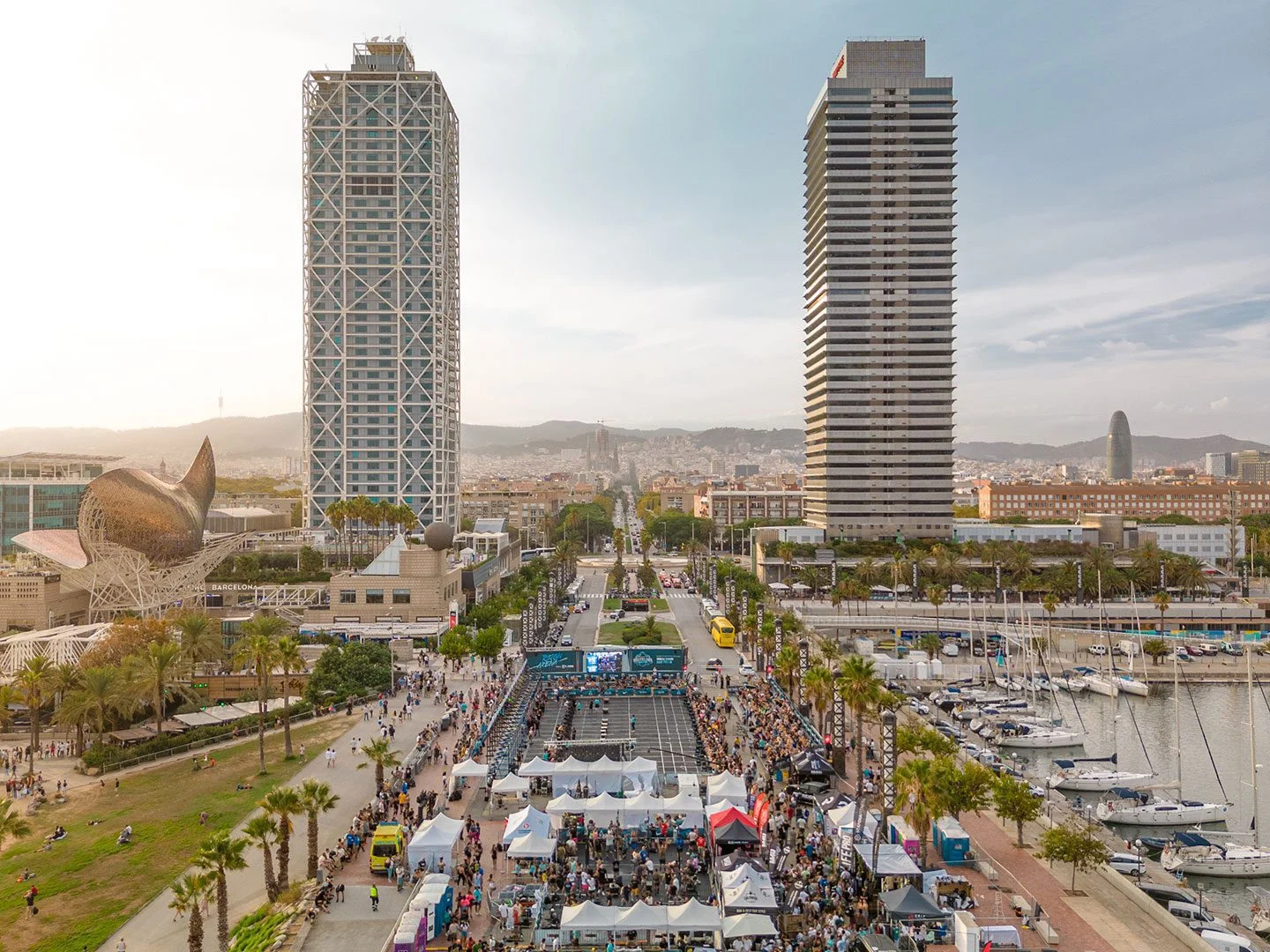
A football match, a city marathon or a surfing championship. More and more events bring together millions of spectators across all kinds of sports. Television coverage of sport and, above all, the rise of online platforms such as social media have made drone filming of sports events increasingly popular.
Giving the audience a wide, clear view of what is happening has been the turning point that, in recent years, has made this one of the preferred ways to show any large-scale event. Want to know more about filming sports events? Droneit explains.
Experiencing it (almost) first-hand
Aerial drone filming has many advantages and uses, especially at sports events. The ability to capture aerial footage with unique shots and perspectives makes broadcasts of these events far more engaging.
One of the drones most widely used to cover sports events is the FPV (First Person View) drone. It brings more dynamism to the shots and gives a spectacular sense of speed. Its main advantage is that the pilot has much more control over the aircraft, which can fly through tight spaces and even travel at 140 km/h. That makes it possible to broadcast a Formula 1 or MotoGP race live.
Sports broadcasting has improved visibly in recent years, and there is still plenty left to explore. Drones have even taken centre stage in less dynamic sports, which might not seem interesting enough for audiences because there is so little movement. Far from it: filming sport with a drone challenges the traditional single fixed-camera broadcast.
In short, using drones to promote sports competitions is a strong bet for broadcasters and the general public alike. With techniques tailored to each type of project, the viewer's experience improves considerably, to the point that they feel almost as if they were taking part in the competition.
Besides allowing us to provide an aerial video and photography service, these unmanned aircraft are also ideal for helping to keep both participants and the spectators watching from close by safe. This is typical, for example, at sports grounds and racing circuits. Drone video gives event organisers important information so they can monitor the event in real time.
Getting close to what seemed out of reach
Today, the platforms that broadcast these events are well aware of consumers' needs and the new habits taking hold in the sector. That is why the huge take-up of social media in almost every part of our daily lives is something to bear in mind.
Together with the internet, social media has become the main channel of communication, so it no longer surprises us that the person sitting next to us on the bus is watching a basketball game, or any other sport, live.
Striking, surprising images therefore add vital value in holding the viewer's attention. Drones deliver original and unusual shots, offering extraordinary viewing angles while always maintaining excellent quality.
Regulation and compliance
Using drones does raise some challenges, however. To use these unmanned aircraft professionally, you must register as an operator with the Spanish Aviation Safety Agency (AESA).
Even a drone weighing less than 250 grams falls within the regulations. Although the rules are somewhat more lenient than for other drones, there are a number of guidelines to follow in order to fly safely and legally:
- Pass, at the very least, the AESA Level 1 exam. This gives you the certificate that allows you to fly in subcategories A1 and A3 (in the Open category).
- Do not exceed 120 metres in height above the ground or 50 metres in horizontal distance.
- Flying is not allowed in national parks, biosphere reserves, wildlife conservation areas or other protected natural areas.
- Do not fly within an 8 km radius of an aerodrome, airport or other controlled airspace.
- Do not breach data protection law or people's right to privacy if the drone carries a camera.
All of this needs to be taken into account when broadcasting sports events. Above all, safety must be guaranteed at celebrations and events that bring large crowds together.
Filming your project from multiple perspectives is possible thanks to the latest technology on board our drones, bringing the viewer into every moment as naturally as possible. Talk to Droneit and tell us what you have in mind.