 VisionHub
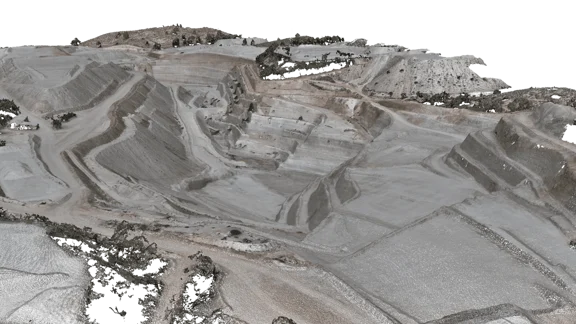
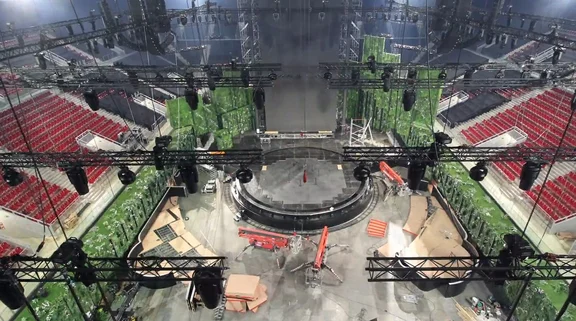
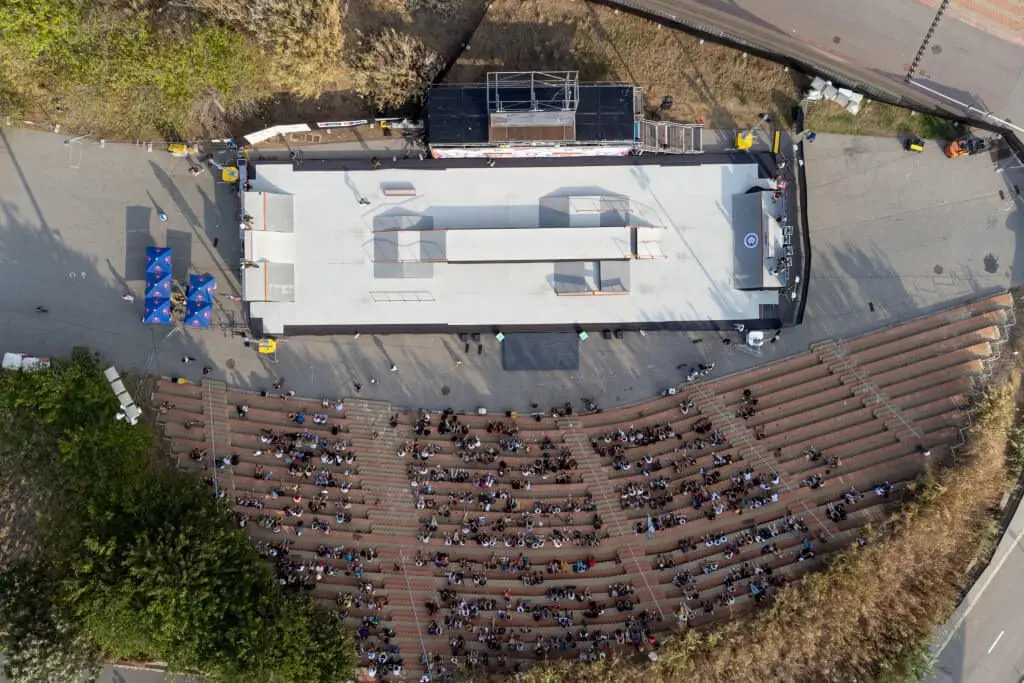
Today, event videos shot as a time-lapse attract much more attention and reach far more people. Achieving this dynamic, eye-catching effect takes time and skilled staff. Droneit provides time-lapse and hyperlapse services, and we have experience using time-lapse to capture the build of pavilions, grandstands and stages, as well as videos during the event that combine ground shots with aerial drone footage.
Time-lapse adds a dynamic, creative effect to event video projects.
Time-lapse quotes
In this article we explain what a time-lapse is and the advantages of event filming with a fixed camera. At Droneit we specialise in time-lapse services for events, tailored to each client's needs. Read on to find out how time-lapse works.
What is a time-lapse for events?
A time-lapse is made up of frames taken at identical time intervals. It usually uses a static shot, although sometimes the camera moves short distances horizontally or vertically. The technique gives the human eye a fast-motion effect.
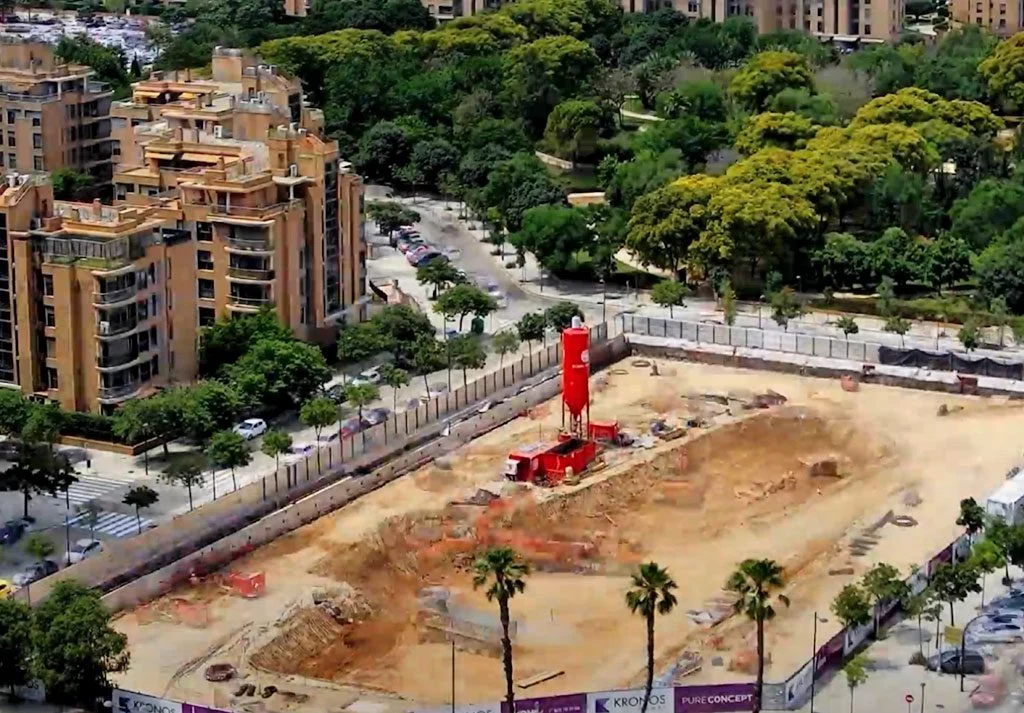
Time-lapse services for events involve photographing the same scene over a set period of time (usually a long one), so that the movement of things that seem static becomes perfectly visible. All these photographs are then put together in chronological order. The uses of this tool are endless. Many companies hire us to document the progress of a construction site, to film a corporate or cultural event, or to capture the build of grandstands, pavilions or stages. The images are captured at set intervals, always with the same framing. A time-lapse can document periods lasting hours, months or even years, and lets you watch long processes in far less time than they really took.
Each photograph taken during the process later becomes one frame of the video. To give you an idea, 25 photographs make one second of video. This is the minimum needed for the human eye to see smooth movement without noticing the jumps from frame to frame. So a video of around 10 seconds needs about 250 photos, and one of 50 seconds needs 1,250, no small number. Yet when we watch the video, what we see is sped up, in very fast motion, at least 25 times faster than real time.
Advantages of using time-lapse for events
Using time-lapse for events has several advantages worth bearing in mind. Here are some of them:
First, time-lapse allows photos to be taken with longer exposures over a long period. In other words, the photos, which will later become single frames, can be taken at what would be considered slow shutter speeds. This makes it possible to capture things like starlight or car light trails.
Another advantage of time-lapse for events is that the images captured with this technology are of very high quality (4K and 8K, in RAW format). This format is usually worked on in editing applications such as Photoshop.
The third advantage is linked to the previous one: the cameras that deliver these high-quality images are very basic. Compared with video cameras, time-lapse cameras are much cheaper.
Finally, even though a time-lapse covers many hours of work, the images take up much less space than a video recording exactly the same thing over the same period.
At Droneit we specialise in time-lapse for events as well as for construction videos. Explore our website to see everything we offer. We look forward to hearing from you.